A major new Lancet Gastroenterology & Hepatology Commission, published today, has shone a spotlight on the crucial role that primary care can play in preventing, detecting and managing liver disease. We were proud to contribute to the Commission, working alongside international experts to develop recommendations that place liver health firmly within routine healthcare. The report highlights the urgent need for earlier diagnosis, better prevention, action on health inequalities and stronger support for people living with liver disease.
Liver disease causes around 2 million deaths worldwide each year and is increasingly driven by alcohol-related liver disease and metabolic dysfunction-associated steatotic liver disease (MASLD). The Commission, led by Dr Helen Jarvis, a GP in the Northeast of England, highlights that liver disease often exists alongside other conditions such as obesity, type 2 diabetes, cancer and mental ill health, making joined-up, person-centred care in a community setting essential. It also emphasises that the burden of liver disease falls disproportionately on people living in more deprived communities and other marginalised groups.
Importantly, the report recognises that primary care is uniquely positioned to improve liver health. GPs and primary care teams are often the first point of contact for patients and have a key role in preventing liver disease, identifying risk factors, diagnosing disease earlier and coordinating long-term care. The Commission calls for liver health to be integrated into wider strategies for managing long-term conditions and reducing health inequalities.
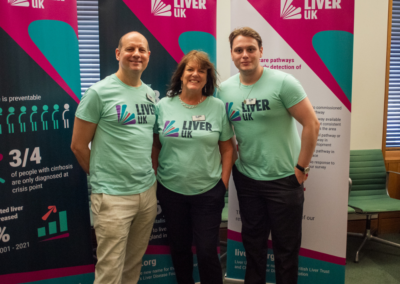
The Commission also highlights our work to improve liver health through public engagement, awareness raising and advocacy. It includes examples of our efforts to promote earlier diagnosis and improve liver care pathways, demonstrating how charities can help drive change at both community and policy level. The report recognises that tackling liver disease requires more than clinical innovation alone; it also requires effective public engagement, collaboration and advocacy to ensure liver health receives greater priority within healthcare systems.
‘Make Early Diagnosis of Liver Disease Routine’ campaign is given as an example of successful advocacy to improve implementation of liver disease pathways within primary care and inform system wide change.
The impact of stigma on people living with liver disease is also addressed. Drawing on evidence including findings from our survey, it highlights how stigma can discourage people from seeking help, affect the care they receive and worsen health outcomes. The Commission calls for greater awareness, education and a commitment to person-centred care to ensure people affected by liver disease receive the support they need.
Vanessa Hebditch, Director of Communications and Policy at Liver UK, said:
“This Commission sends a powerful message that liver health cannot remain an afterthought within primary care. Earlier diagnosis, better prevention and more coordinated care could transform outcomes for thousands of people affected by liver disease. We are particularly proud to have contributed to this work and to see recognition of the important role that public engagement, patient advocacy and campaigning can play in driving improvements in liver health. The recommendations provide a clear roadmap for action, and we now need to ensure they are translated into meaningful change for patients.
The Commission’s recommendations closely align with many of our long-standing priorities, including raising awareness of liver disease, improving early detection, addressing health inequalities, reducing stigma and ensuring patients have access to the information and support they need.
As liver disease rates continue to rise, particularly those linked to metabolic health and alcohol harm, integrating liver health into routine primary care offers a significant opportunity to save lives, reduce pressure on NHS services and tackle longstanding inequalities. The challenge now is to turn the Commission’s recommendations into action.