On the 21st of May 2026, the 79th World Health Assembly voted to adopt a resolution on steatotic liver disease.
Steatotic liver disease includes metabolic dysfunction-associated steatotic liver disease (MASLD), metabolic dysfunction-associated steatohepatitis (MASH), Metabolic dysfunction-associated steatotic liver disease and Alcohol-related liver disease (MetALD) and Alcohol-related liver disease (ARLD).
Liver disease can now be included in national noncommunicable disease (NCD) strategies and health system planning — placing it alongside long-established priorities such as cardiovascular disease, cancer, and diabetes.
This is the missing piece in the global noncommunicable disease response. For those of us working in liver health, and for the millions of people living with conditions like metabolic dysfunction-associated steatotic liver disease (MASLD), metabolic dysfunction-associated steatohepatitis (MASH), Metabolic dysfunction-associated steatotic liver disease and Alcohol-related liver disease (MetALD) and Alcohol-related liver disease (ARLD), this is a welcome turning point.
The British Liver Trust had previously joined other nations in calling for this resolution and is delighted that it has now been adopted.
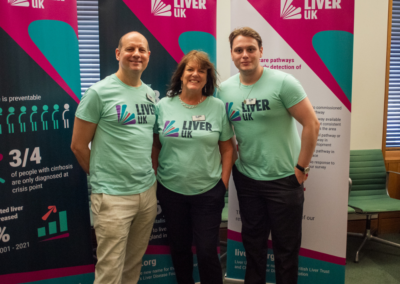
Pamela Healy OBE, Chief Executive of the British Liver Trust, said:
“This is a landmark moment for everyone affected by liver disease. For too long, preventable liver disease has been overlooked in national and global health policy, leaving patients without the recognition, support, and treatment they deserve.
We warmly welcome this resolution and call on the UK Government to act on it without delay — embedding liver health into our national health strategy and ensuring the NHS is ready to find and treat the millions of people living with liver disease who don’t yet know it.”
For decades, liver disease has been the missing piece in global health policy. The World Health Organization’s noncommunicable disease agenda has focused on cardiovascular disease, cancer, diabetes, and chronic respiratory conditions — the so-called “big four.” Despite affecting an estimated 1.5 billion adults worldwide, steatotic liver disease has remained invisible in national health plans, international financing frameworks, and noncommunicable disease accountability systems. Governments were not required to track it, report on it, or fund it. That changes now.
The resolution gives World Health Organization Member States a formal international mandate to include liver disease in their national noncommunicable disease strategies for the first time in history. It calls on governments to integrate liver health into national health planning, update monitoring frameworks to include liver health indicators, and align health financing with joined-up, prevention-centred care that tackles the shared risk factors, obesity, type 2 diabetes, poor diet, that drive the condition.
The scale of the problem has long justified this moment. In Europe alone, the European Association for the Study of the Liver-Lancet Commission 2.0, published just weeks before the World Health Assembly vote, estimates 780 preventable deaths every single day and an annual economic cost of €55 billion attributable to liver disease. In the UK, the National Institute for Health and Care Excellence estimates that around 2-3% of the population have MASH, which is around 1 to 2 million people, and the majority have no idea. MASH, the serious inflammatory form of the disease, significantly raises the risk of cirrhosis, liver cancer, and cardiovascular mortality. It is a silent condition, and silence has cost lives.
For the UK, this resolution lands at a critical moment. The National Institute for Health and Care Excellence is expected to publish guidance on emerging medications for MASH in June 2026 – the first treatments for the condition ever to be assessed for National Health Service use. The science has arrived. The political framework is now catching up. What is needed next is the infrastructure – the diagnostic pathways, the referral systems, the clinical capacity to find the millions of people living with liver disease who do not yet know it.
For the full report from WHO visit Steatotic liver disease: a missing piece in the global noncommunicable disease response